Office of the Executive Vice President for Administration > Priorities and Initiatives >
Inclusive Campus Initiative
.jpg?h=683&iar=0&w=1024)
01 / 05
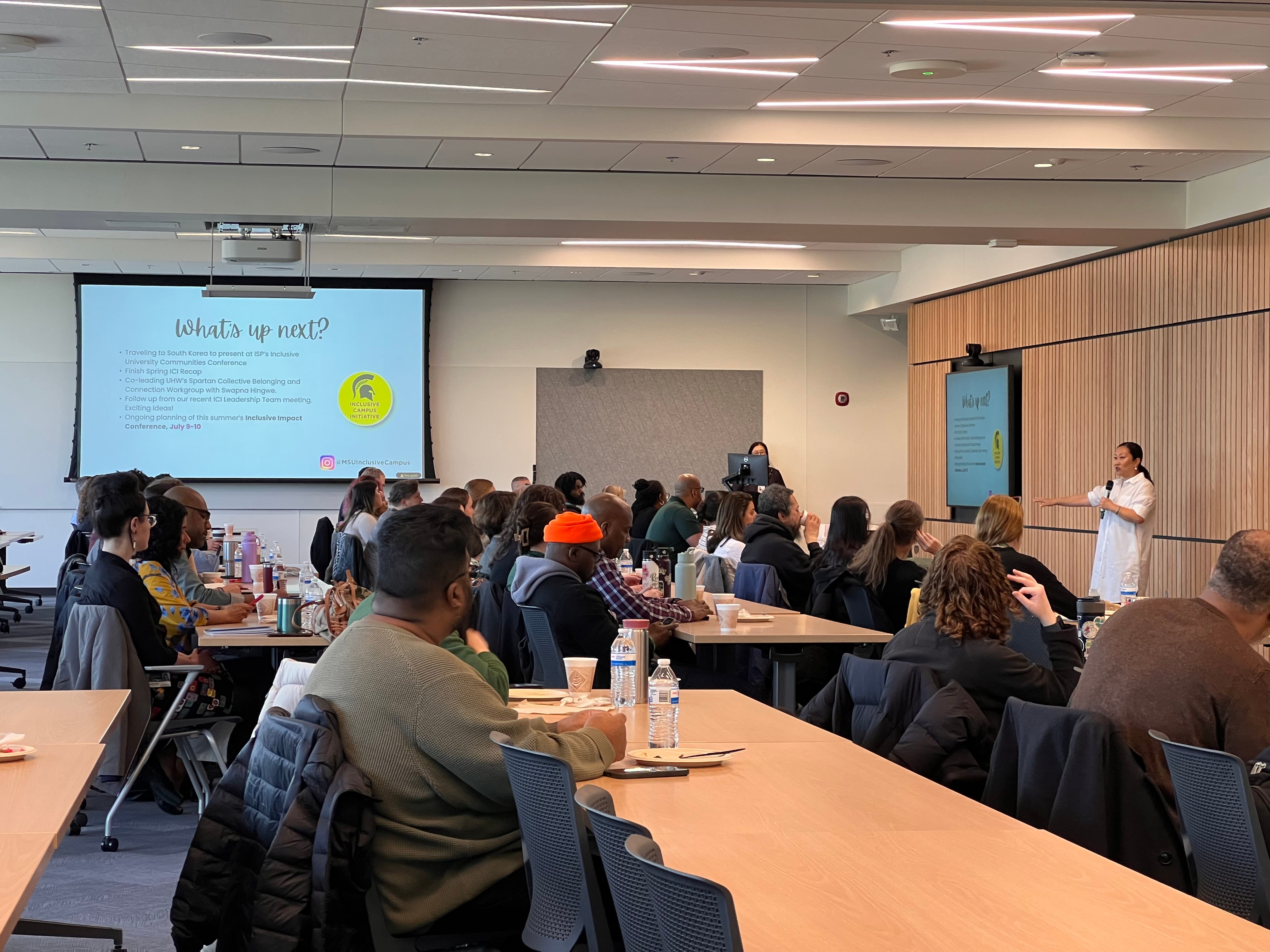
The Inclusive Campus Initiative (ICI) is an innovative and strategic ground-up approach that organically unites campus partners who dedicate time beyond their formal roles or departmental affiliations to advance the work within an inclusive campus ecosystem. This collective movement that galvanizes collaboration breaks down silos and inspires campus partners to come together through a shared vision of inclusion.
Further, the ICI strives to break the, often invisible, barriers of student access to administrators, charting a path to transparency, understanding, and ultimately, community. Through this method, students have a through line for direct problem solving, community forums or just a listening ear necessary to genuinely feel a sense of belonging as a Spartan. While many of our campus community concerns are complex, often without an easy resolution, the uniqueness of the ICI is in offering students and community members a space where all can be vital contributors in the process of creating a more inclusive campus.
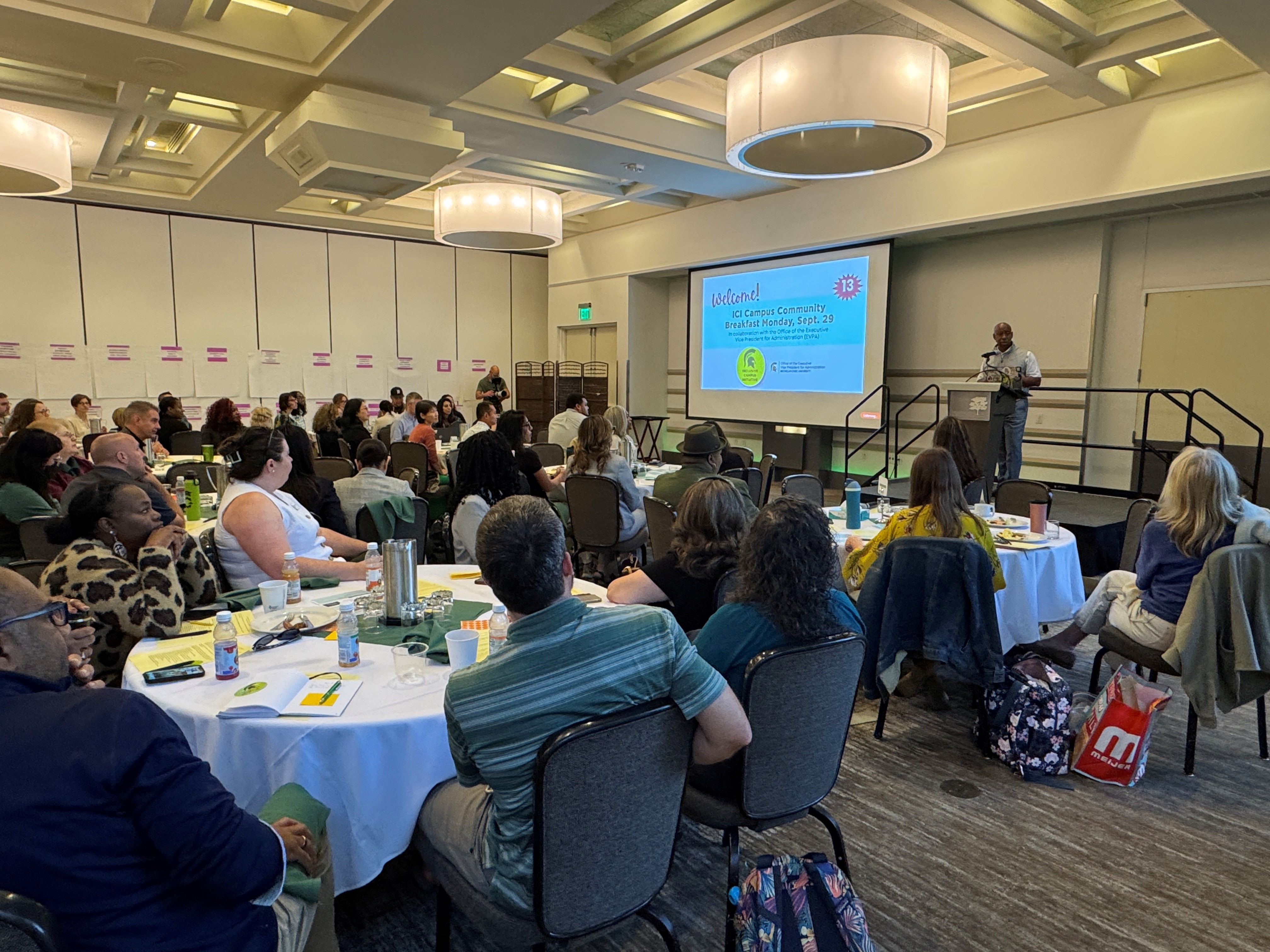
The ICI hosts several opportunities for community to come together such as:
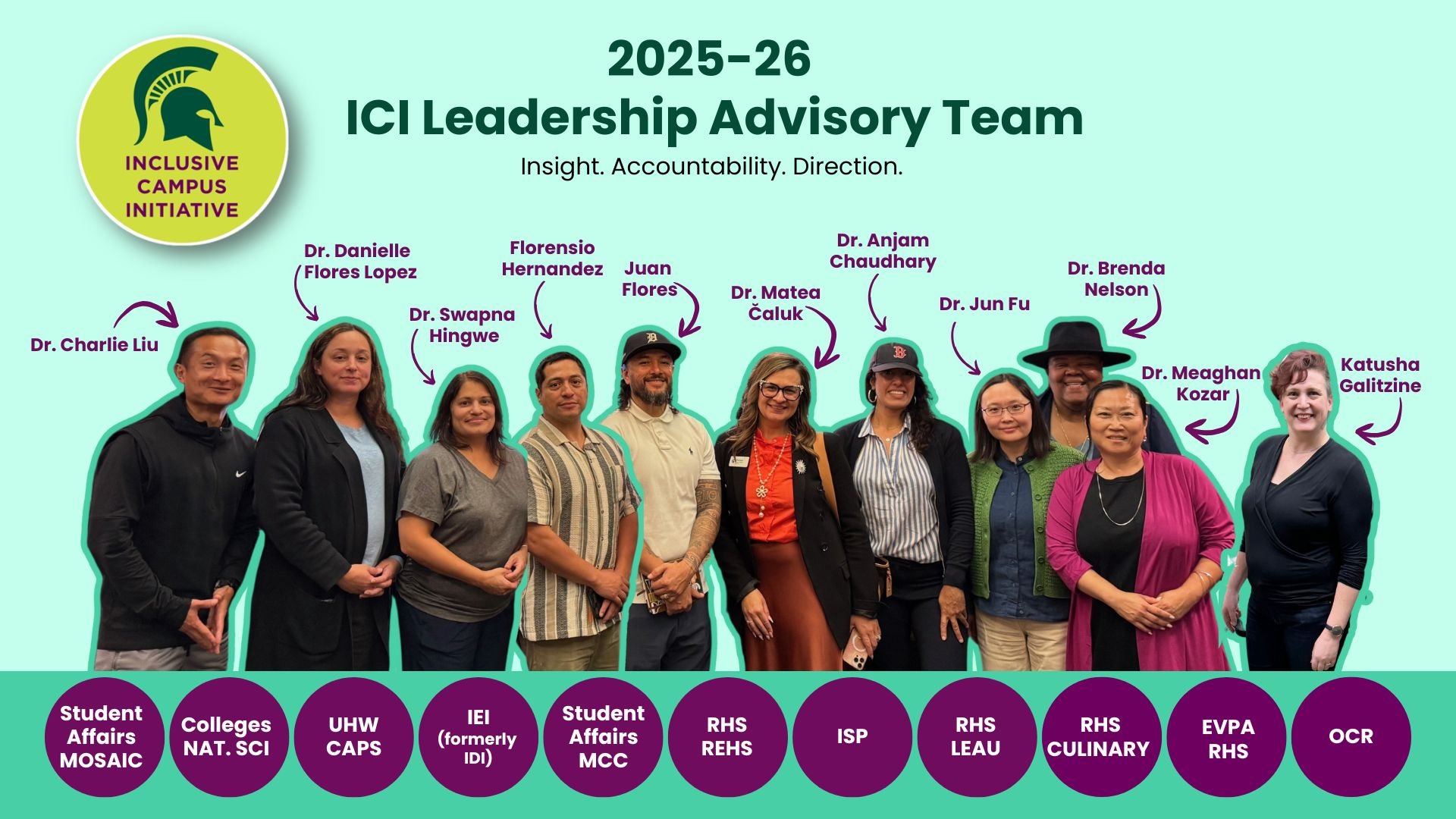
The Inclusive Campus Initiative reports to the Office of the Executive Vice President for Administration (EVPA) and is sponsored by Residential and Hospitality Services (RHS). The ICI is led by Project Director Meaghan Kozar, Ph.D., who works alongside the ICI Leadership Advisory Team, the ICI Student Leadership Advisory Team and many campus partners at Michigan State University.
The Inclusive Campus Initiative is open to all without preference or restriction based on personal protected identity. Explore campus opportunities that foster connect and belonging, managed by the Inclusive Campus Initiative:
For more information, contact Meaghan Kozar, Ph.D.
The Snippet Project is a series of brief, video-based, skill-building lessons that provides a basic framework for navigating work and life challenges. These “snippets” of resilience education are designed to increase participant’s emotional resilience, psychological flexibility, stress hardiness and capacity for wise, value-guided action.
The standard program is 15 weeks. To create opportunity and drive community building across the EVPA portfolio, the Inclusive Campus Initiative is piloting a condensed eight-week version to portfolio staff, which will kick off on Thursday, October 1, 2026.